
Electric Vehicle Sales Surge Past Expectations in Q4 2024
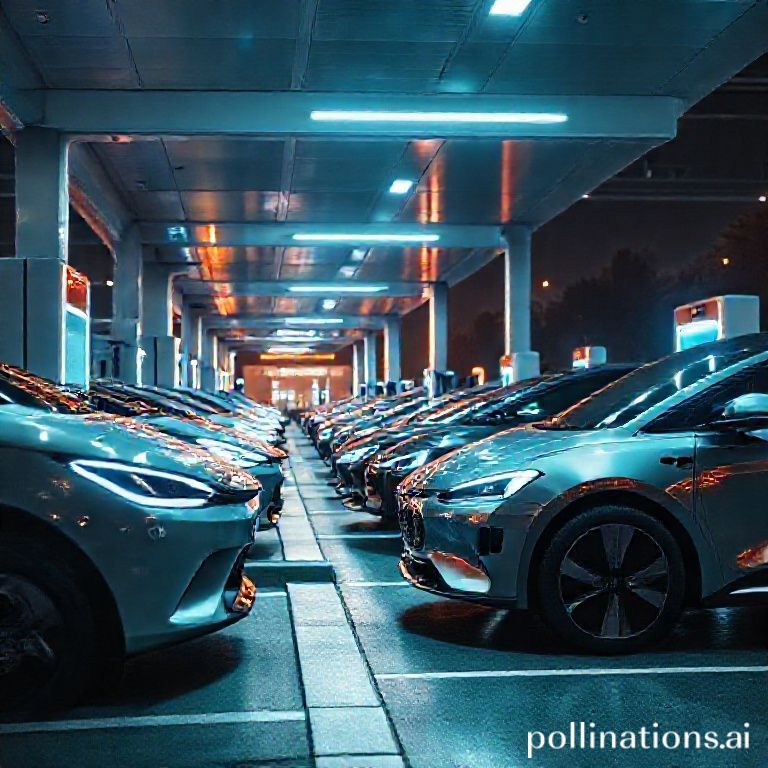
Electric Vehicle Sales Surge Past Expectations in Q4 2024
DETROIT — Electric vehicle sales in the United States surged to record levels in the fourth quarter of 2024, exceeding analyst expectations and marking what industry experts are calling a pivotal moment in the transition away from internal combustion engines.
According to data released Tuesday by automotive research firm Motor Intelligence, EVs accounted for 16.7% of all new vehicle sales in Q4 2024, up from 12.3% in the same period last year. The surge represents the fastest quarterly growth rate since the pandemic recovery period of 2021-2022.
Record-Breaking Numbers
Total EV sales for Q4 2024 reached approximately 425,000 units, bringing the full-year total to 1.52 million vehicles—a 38% increase over 2023. The numbers significantly outpaced earlier projections from industry analysts, who had forecast more modest growth of around 25-30% for the year.
"We're seeing the convergence of several factors that are finally making EVs mainstream," said Jessica Chen, senior automotive analyst at Morgan Stanley. "Better vehicles, better infrastructure, and better prices are all coming together at once."
The growth was particularly strong in the traditionally truck-dominated American market, where electric pickup trucks and SUVs saw explosive demand. Ford's F-150 Lightning, Rivian's R1T, and Tesla's Cybertruck collectively sold more than 180,000 units in Q4, demonstrating that American consumers are ready to embrace electric powertrains in their preferred vehicle categories.
What's Driving the Growth
Several factors contributed to the stronger-than-expected performance:
Expanded Model Availability: Automakers introduced 23 new EV models in 2024, giving consumers more choices across price points and vehicle types. The availability of electric options in popular segments like mid-size SUVs and pickup trucks proved particularly important.
Improved Charging Infrastructure: The number of public charging stations in the U.S. grew by 42% in 2024, with major investments from both private companies and government programs. The expansion of fast-charging networks along major highways has significantly reduced "range anxiety" among potential buyers.
Competitive Pricing: Increased competition and manufacturing scale have driven down EV prices. The average transaction price for an EV fell to $52,400 in Q4 2024, down from $58,600 a year earlier. Several models now qualify for the full $7,500 federal tax credit, effectively bringing prices into the mid-$40,000 range.
Battery Technology Advances: Improvements in battery technology have extended ranges while reducing costs. The average EV range increased to 291 miles in 2024, up from 260 miles in 2023, while battery costs per kilowatt-hour fell by approximately 15%.
Traditional Automakers Gain Ground
While Tesla remains the market leader with approximately 48% market share, traditional automakers made significant gains in 2024. General Motors, Ford, and Hyundai-Kia collectively captured 32% of the market, up from 24% in 2023.
"The narrative that Tesla would dominate the EV market indefinitely is clearly changing," noted automotive historian James Patterson. "The legacy automakers are leveraging their manufacturing expertise, dealer networks, and brand loyalty to compete effectively."
GM's Ultium platform, which underpins vehicles like the Chevrolet Blazer EV and GMC Sierra EV, proved particularly successful. The company sold more than 210,000 EVs in 2024, tripling its 2023 total and positioning it as the second-largest EV seller in the U.S. market.
Ford also showed strong performance, with its electric F-150 Lightning and Mustang Mach-E combining for approximately 165,000 sales. The company announced plans to invest an additional $3 billion in EV production capacity to meet growing demand.
Regional Variations
EV adoption rates varied significantly by region, reflecting differences in charging infrastructure, electricity costs, and local incentives:
California continued to lead with EVs representing 28% of new vehicle sales, followed by Washington (19%), Oregon (17%), and Colorado (15%).
Southeastern states showed the fastest growth rates, with Georgia, Florida, and North Carolina all seeing EV market share more than double from 2023 levels, albeit from lower baselines.
Midwest and Plains states generally lagged in adoption rates, though major metropolitan areas like Chicago, Minneapolis, and Denver showed strong EV uptake.
Economic and Environmental Impact
The surge in EV sales has significant implications for both the economy and the environment:
Job Creation: The EV transition is creating new jobs in battery manufacturing, charging infrastructure installation, and electric powertrain production. However, it's also disrupting traditional automotive employment, particularly in engine and transmission manufacturing.
Energy Grid Implications: Utilities are investing heavily in grid upgrades to accommodate increased electricity demand from EV charging. Studies suggest that managed charging programs can actually help stabilize grids by providing flexible demand.
Emissions Reductions: The EPA estimates that the 1.52 million EVs sold in 2024 will prevent approximately 4.2 million tons of CO2 emissions over their lifetimes compared to equivalent gasoline vehicles, even accounting for electricity generation emissions.
Challenges Remain
Despite the positive sales figures, the EV industry faces ongoing challenges:
Charging Infrastructure Gaps: While urban and suburban charging networks have improved, rural areas still lack adequate infrastructure. Long-distance travel remains challenging in many parts of the country.
Grid Capacity: Some regions face constraints in electricity generation and distribution capacity that could limit EV adoption without significant infrastructure investment.
Affordability: Despite price reductions, EVs remain more expensive than comparable gasoline vehicles for many buyers. The used EV market is still developing, limiting options for budget-conscious consumers.
Political Uncertainty: Changes in federal policy could affect tax incentives and emissions regulations that have supported EV adoption. The upcoming election has created some uncertainty about the long-term policy environment.
Industry Outlook
Automakers are responding to the strong demand with ambitious production plans. Major manufacturers have collectively announced more than $120 billion in EV-related investments through 2030, including new battery plants, assembly facilities, and charging networks.
"We're past the tipping point," declared Mary Barra, CEO of General Motors, at a recent investor conference. "The question is no longer if EVs will dominate the market, but how quickly we can scale production to meet demand."
Analysts project that EV market share could reach 25-30% by 2026 and potentially exceed 50% by 2030, though these projections depend on continued improvements in technology, infrastructure, and affordability.
Global Context
The U.S. surge in EV sales comes as global EV adoption accelerates. China remains the world's largest EV market, with EVs representing more than 35% of new vehicle sales in 2024. Europe also continues to show strong growth, with several countries on track to phase out internal combustion engine sales by 2030.
However, the U.S. market's growth is particularly significant given Americans' historical preference for larger vehicles and longer driving distances—factors that have traditionally favored gasoline powertrains.
Consumer Perspectives
Surveys of recent EV buyers reveal changing attitudes toward electric vehicles:
- 78% cited lower operating costs as a primary motivation
- 64% mentioned environmental concerns
- 52% were attracted by performance characteristics
- 43% valued the latest technology features
Notably, "early adopter" demographics are giving way to mainstream consumers, with EV buyers increasingly resembling the broader car-buying population in terms of age, income, and geographic distribution.
Looking Ahead
As 2025 begins, the automotive industry stands at a historic crossroads. The fourth quarter of 2024 may be remembered as the moment when electric vehicles truly entered the mainstream of American transportation.
"We're witnessing the beginning of the end of the gasoline era," said automotive futurist Dr. Robert Kim. "The transition won't happen overnight, but the direction is now unmistakable."
With new models launching, infrastructure expanding, and costs continuing to fall, the momentum behind electric vehicles appears poised to accelerate further in the years ahead. The question facing the industry is no longer whether the electric transition will happen, but how quickly it will unfold and who will lead the way.
© 2025 USAmerica Today. All rights reserved.
News curated by Thomas Anderson.