
The Robotics Revolution Betrayed: How Roomba Invented the Smart Home—and Lost the Future
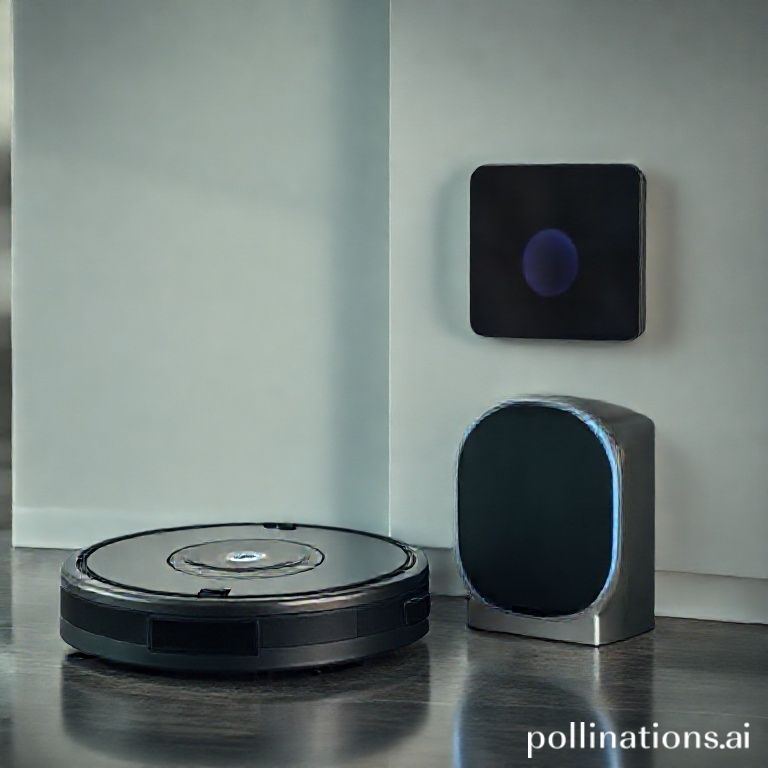
BREAKING TECH ANALYSIS: The Robotics Revolution Betrayed
The story of the Roomba is a profound tragedy of the technology world. It is the story of a company, iRobot, that did not just invent a revolutionary product but established the entire category of the autonomous home robot. Yet, despite this pioneering start, the company stands today as a stark example of how strategic blindness can doom a market leader, handing a multi-billion dollar future to rivals.
We are witnessing a slow-motion corporate collapse where the original innovator became little more than a profitable footnote. Roomba had the keys to the smart home kingdom—they had the maps, the movement, and the trust of consumers—but failed catastrophically to leverage their core technology into a comprehensive ecosystem.
The Dawn of Domestic Automation
When the first Roomba rolled onto carpets in 2002, it wasn't just a vacuum cleaner; it was a physical manifestation of science fiction. iRobot, founded by MIT roboticists, solved the complex problem of navigation in an unstructured environment years before self-driving cars were feasible. They didn't just automate cleaning; they democratized robotics.
This early dominance gave iRobot an unparalleled competitive advantage: data. Every single Roomba sold was mapping the interior topology of the American home. This spatial understanding—the true gold standard of the smart home platform—should have been Roomba’s launchpad into controlling everything from security and air quality to temperature regulation.
Instead, iRobot remained fiercely focused on floor care. As one industry analyst noted, "They saw themselves as a premium appliance company, not a foundational platform company." This myopic focus left the doors wide open for tech giants who understood that the future wasn't just about movement, but connectivity and control.
Strategic Missteps: Trading Platform for Product
The critical pivot point came around the mid-2010s, coinciding with the rise of voice assistants like Amazon’s Alexa and Google Home. While these new devices controlled the digital layer, the Roomba was physically moving through the environment, developing highly accurate V-SLAM (Visual Simultaneous Localization and Mapping) technology.
Roomba knew the layout of the furniture, the boundaries of rooms, and the most efficient paths—the perfect centralized hub for directing other smart devices.
The fatal error? iRobot treated the mapping data as a feature to improve vacuuming, rather than the foundation of an entirely new robotics market. They spent decades perfecting the vacuum nozzle while Amazon and Google rapidly cornered the home automation ecosystem using simple, low-cost microphones and speakers.
By the time iRobot attempted to integrate its maps via partnerships, they were already subservient. They were providing valuable navigation data to platforms that would ultimately control the consumer relationship and the monetization funnel. The pioneer had become a vendor.
The Amazon Lifeline and the Bitter Irony
The irony of iRobot’s situation was brutally confirmed when Amazon announced plans to acquire the company for $1.7 billion. For many, the deal was less a triumph and more a rescue mission—a tacit admission that iRobot could not survive the intense competition from cheaper Asian manufacturers and could not scale its platform without the resources of a global behemoth.
The attempted acquisition, which faced significant regulatory hurdles, revealed the underlying strategic value Amazon saw: not just a vacuum company, but the keys to precise indoor navigation required for future logistics and service home robotics.
Regardless of whether the acquisition finalizes, the future has already been lost. iRobot invented the technology that powers millions of smart homes, yet it failed to build the necessary software superstructure. The company that pioneered the autonomous machine now struggles for market share in the very space it created, a sobering lesson in the high-stakes game of technology platform dominance. The home robot arrived, but the people who invented it failed to stake their claim on the future it promised.
© 2025 USAmerica Today. All rights reserved.
News curated by Eleanor Vance.